
How Many Restrooms Does a County Fair Need?
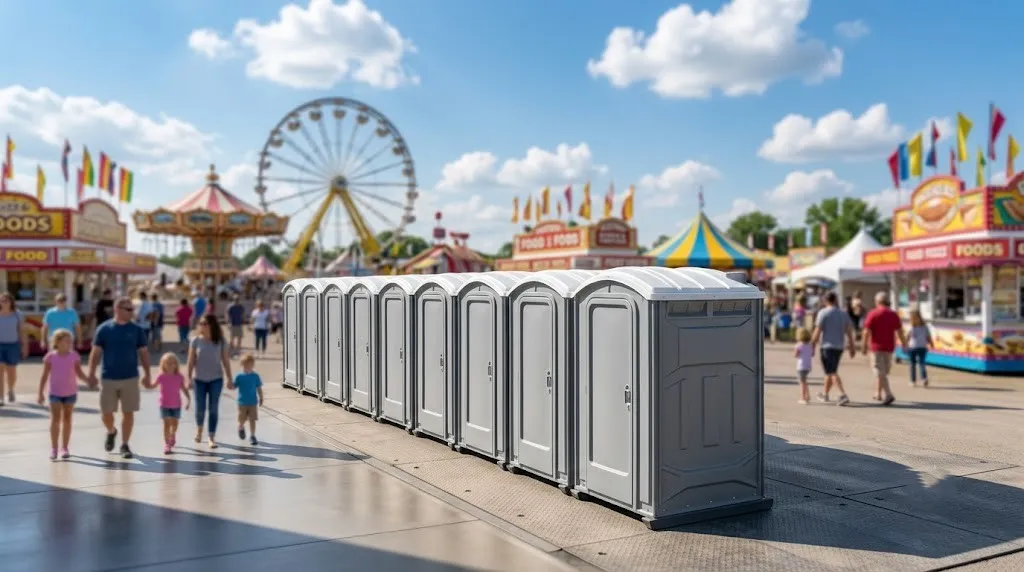
Fair crowds don't behave like a construction crew, so OSHA 1926.51(c) worker ratios are a starting point, not the finish line. That standard sets 1 toilet for 20 workers or fewer, scaling up to 1 seat and 1 urinal per 40 as headcount grows. For a public event in Brandon, we scale from expected daily attendance and dwell time instead, then add units for food vendor lines and midway crowds where people cluster. A weekend fair pulling several thousand visitors a day typically needs a bank of standard units near the grandstand, another near the midway, and a smaller cluster by vendor rows. Every cluster needs an accessible option: ADA Standards 213.2 requires at least 5 percent of any cluster of single-user units to be accessible, and never fewer than one. That means even a small four-unit bank by the livestock barn needs one ADA unit in the mix. We also route in handwashing stations near food booths, since fairgoers expect a sink, not just sanitizer. If your event runs into ag exhibits or hand-labor demonstrations, farm and agricultural restroom setups follow a different sizing logic than a grandstand crowd. Not sure where to start counting? Our porta potty placement guide walks through gate counts, dwell time and vendor density so the number isn't a guess.
Where Should Restrooms Go on the Fairgrounds?
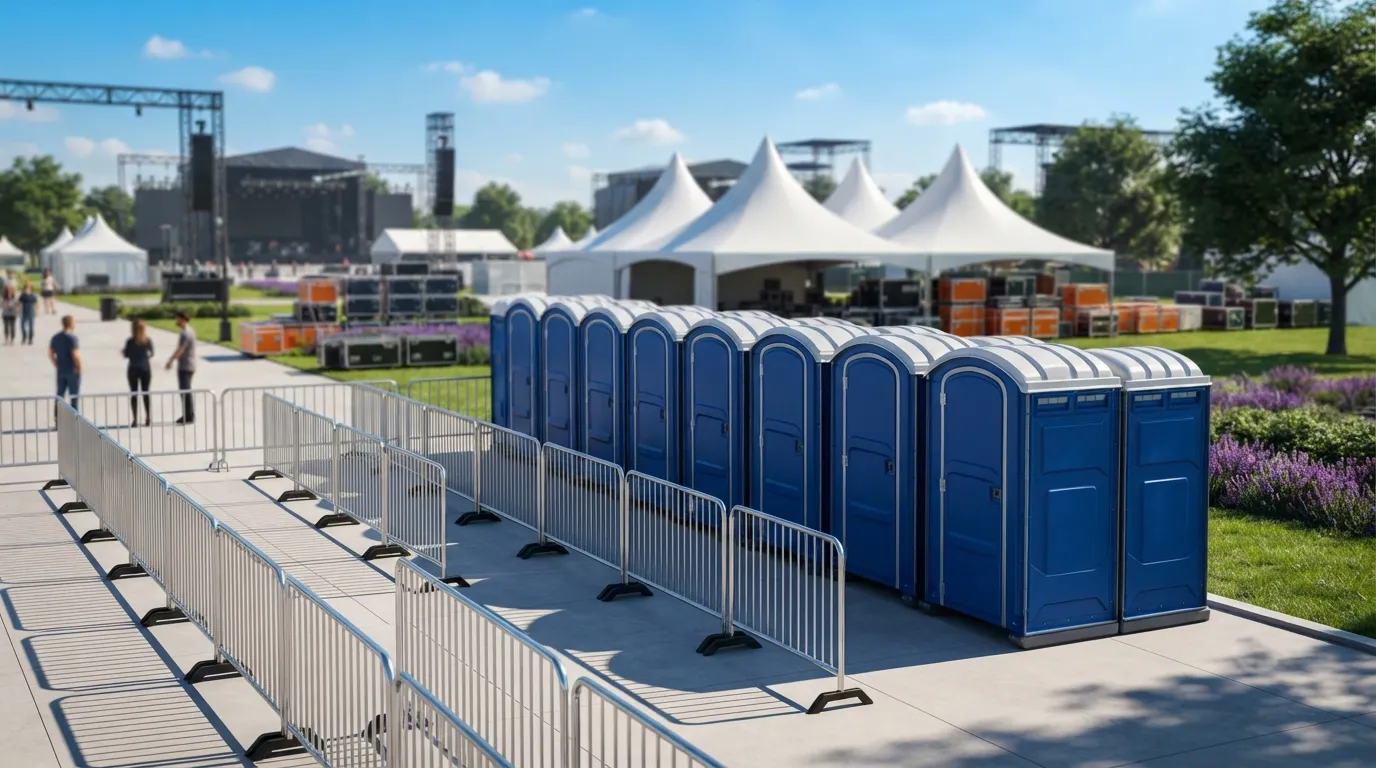
Placement decides whether restrooms actually get used or just sit there annoying people. Units belong on firm, level ground near high-traffic paths, not tucked behind a barn where nobody can find them at dusk. ADA Standards 302.1 requires the ground surface itself to be stable and slip resistant, which matters on grass lots that get soft after a Brandon summer storm. Clear routes matter too: ADA Standards 403.5.1 sets a 36 inch minimum clear width on the path to any accessible unit, and the door opening itself needs 32 inches per ADA Standards 404.2.3. A standard unit runs about 44 by 48 inches on the ground and stands roughly 92 inches tall, so we map clearances before delivery day, not after the trucks show up. If your fair includes a beer garden or ticketed VIP area, a deluxe flushable unit or a small restroom trailer reads better than a bank of standard units, and a 2 stall restroom trailer fits tighter footprints near a stage or hospitality tent. For larger fairs with sustained crowds all weekend, an 8 stall restroom trailer cuts wait times without eating up parking. We also stage temporary fencing around restroom clusters near livestock areas to keep foot traffic organized and animals separated from the queue.
Do Fair Restrooms Need a City Permit?
Placement in the public right of way or on fairground property may need sign-off, and that requirement is not verified here, so confirm it directly with the City of Brandon before locking in a site plan. Permit questions come up more with dumpsters and fencing than with restrooms, since roll-offs and fence lines often sit closer to public streets. If your fair also brings in food trucks or a full carnival midway, you'll likely need roll-off dumpsters for the volume, and our dumpster permit requirements page covers what to check locally before delivery. Fairs running food vendors with fryers or grills should also plan for grease trap pumping if a booth ties into a fixed line. For handwashing near food service, 29 CFR 1910.141(d)(2) requires soap and towels or a hand-drying device at any washing facility, and sanitizer alone doesn't satisfy that. Fairgrounds in the Brandon area, including sites out toward Valrico about 5.4 miles east or Plant City 16.6 miles northeast, all fall under different jurisdictions, so don't assume one city's rule carries over. We coordinate delivery timing and unit counts once your venue and permit status are locked, and we'll flag anything that needs city confirmation before we quote a final service quote.
| unit | duration | typical price |
|---|---|---|
| standard | event | $400 |
| ada | day | $230 |
| deluxe | day | $300 |
| trailer | event | $3500 |
How far in advance should we book restrooms for a fair?
Book as soon as your date and venue are set, ideally 4 to 6 weeks out for a multi-day fair. Grandstand-adjacent slots and trailers go first. Last-minute bookings still happen, but unit selection narrows fast once other Brandon events lock in the same weekend.
Can we get restrooms delivered the morning of the fair?
Yes, if the site is accessible and confirmed in advance. Roll-off and trailer deliveries need about 60 feet of straight clearance behind the truck, so tight fairground gates or fencing need a site check first.
How often are units serviced during a multi-day fair?
Daily service is standard for high-traffic fair weekends. ANSI/PSAI Z4.3 sets a baseline of one visit per week for lighter use, but fair-level crowds need daily attention to keep tanks and supplies ahead of demand.
Do we need an ADA unit even for a small exhibit tent?
Yes, if you're clustering portable units at all. ADA Standards 213.2 requires at least one accessible unit per cluster, even a small bank of four near a single exhibit tent.
What's the difference between standard units and a restroom trailer for a fair?
Standard units cost less and work fine for midways and general crowds. A restroom trailer suits VIP areas, beer gardens or sustained heavy use, with flushing fixtures and climate control standard units don't offer.
Next step
Get a delivery date
Tell us the address, the dates and the headcount. We size the order and confirm the route.