
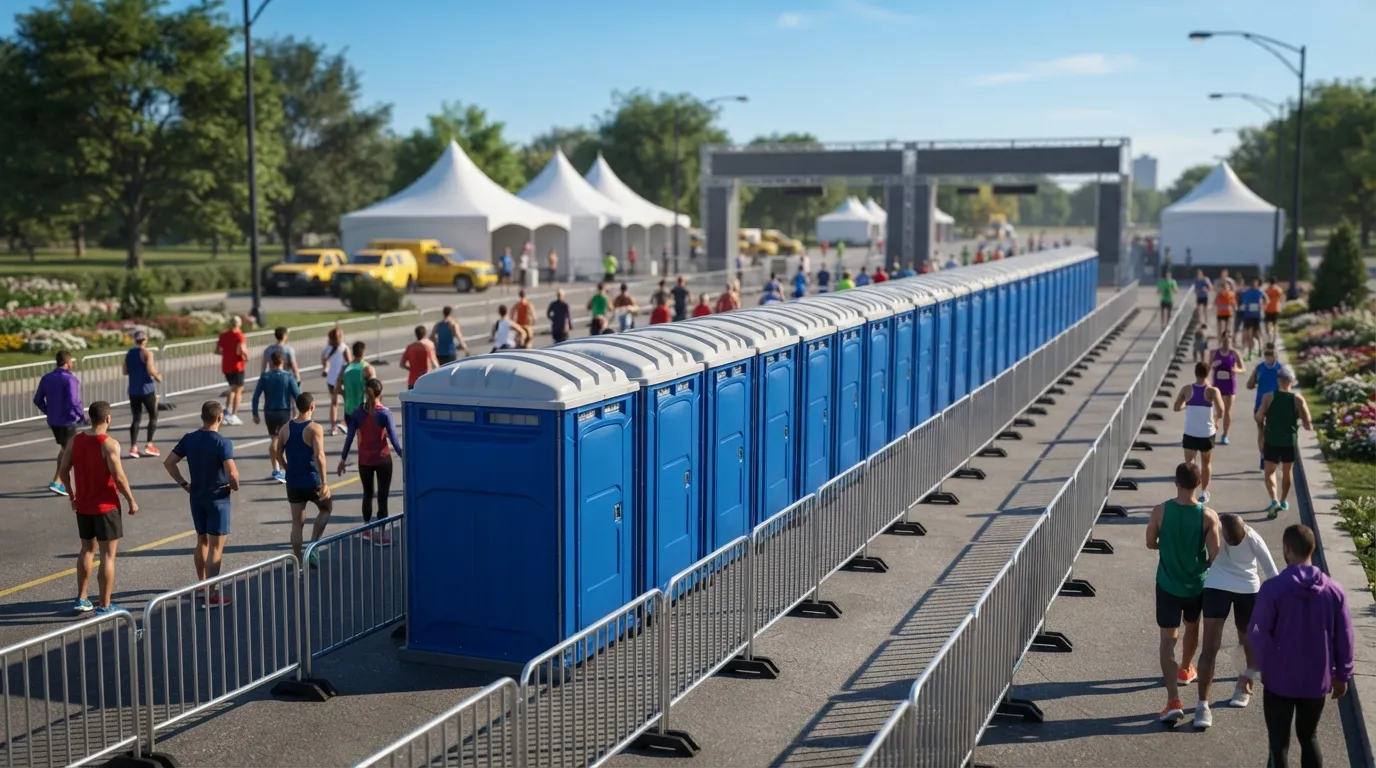
How many restrooms does a marathon need?
Start with the crowd at the line, not the runners passing through. A start and finish festival area with 500 people needs a different count than a rest stop 6 miles out on a rural stretch. Our placement guide walks through spacing logic, but the short version: cluster units at the start/finish, then scatter singles at aid stations. OSHA 1926.51(c) sets a baseline of 1 toilet for every 20 workers on a jobsite, and race organizers often use that same ratio for volunteers and staff, separate from the runner count. If your event pulls a mixed crowd of spectators and racers, treat it like a festival rather than a straight road race. A standard porta potty rental rents for a single day in the $100 to $350 range depending on delivery distance and add-ons, which covers most one-day races that set up Friday and break down Saturday afternoon. Longer events, like a two-day ultra with a Saturday and Sunday field, run closer to weekend pricing instead of two separate day rates. Need ADA coverage at the finish line? ADA accessible units follow ADA Standards 213.2, which requires at least 5 percent of clustered units to be accessible, never fewer than one. Pair that with handwashing stations near any food or medical tents, since aid station volunteers handling wound care or hydration mix benefit from real soap and water under 29 CFR 1910.141(d)(2), which specifically requires soap and a drying method, not just sanitizer.
Where should restrooms go along the course?
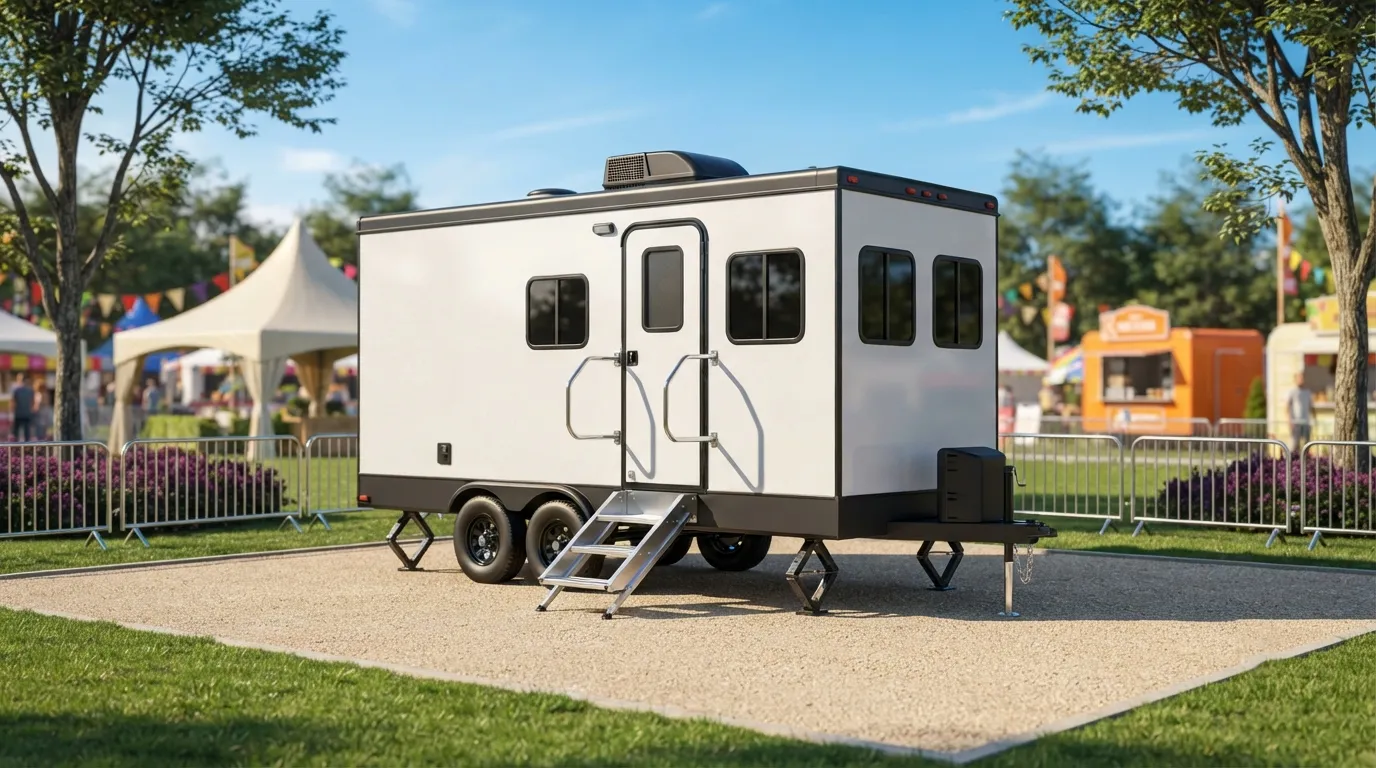
Aid stations, timing mats and the finish chute are the three anchor points. Units at aid stations should sit off the running lane but within a short walk, on ground that is stable and firm, consistent with the surface expectations in ADA Standards 302.1 for any accessible unit you place. At the finish, expect the heaviest single crush of the day: runners finishing, families waiting, and volunteers breaking down tents all competing for the same restrooms within an hour window. This is where a restroom trailer rental earns its keep over a bank of standard units, especially for races that draw a Brandon-wide crowd rather than a small local field. A 2 stall restroom trailer or 4 stall restroom trailer gives finish-line staff and VIP tents a faster-moving line, and trailer rentals for a single event day run from $175 up past $2,500 depending on stall count and finish quality. If your course loops back through Brandon proper more than once, you can serve two aid stations off one delivery route, cutting the delivery fee compared to scattering units across a point-to-point layout that stretches toward Valrico, 5.4 miles east, or Mango, 6.1 miles north.
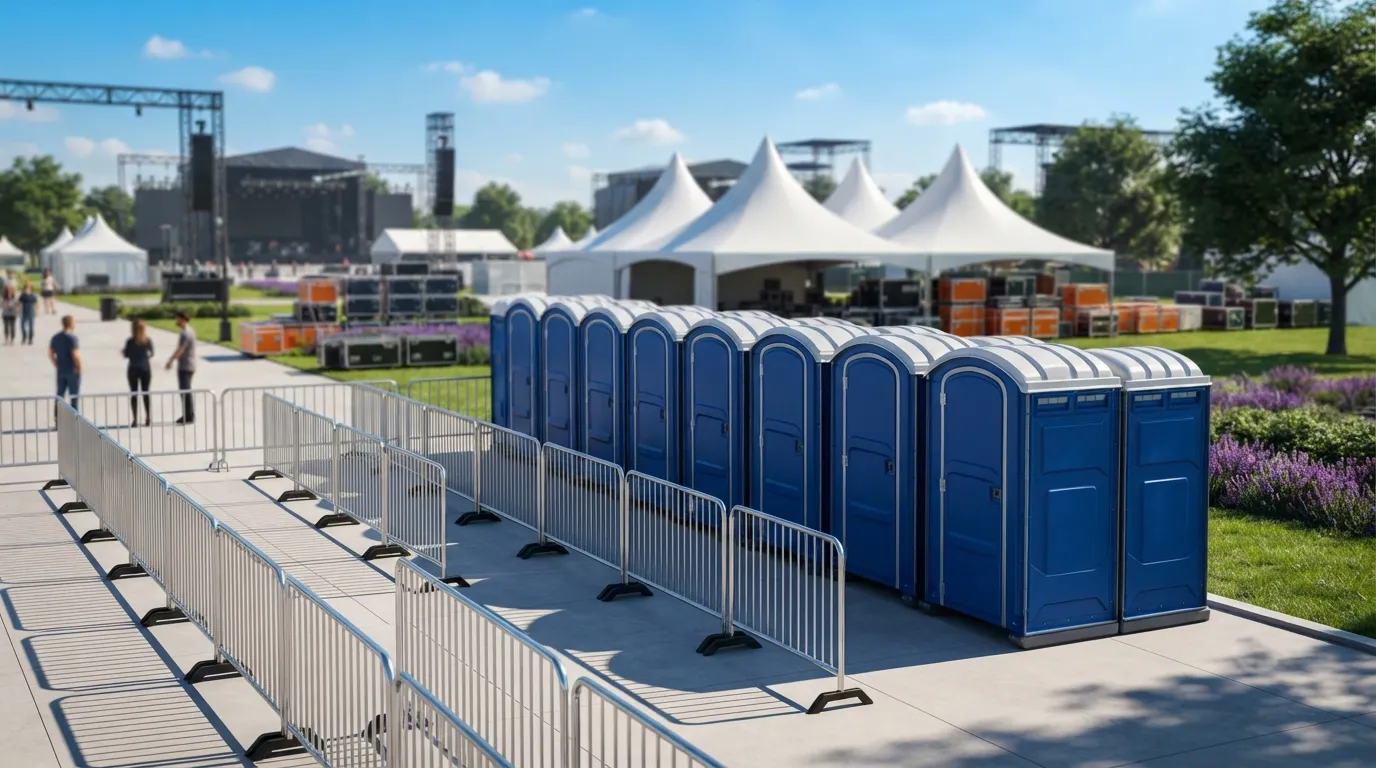
How to brace a temporary power pole for race day power?
Timing equipment, PA systems and lighting at a night start all need power, and that usually means a temporary power pole staked near the command tent. Bracing starts with a stable footing: the pole needs to sit on firm, level ground, the same standard ADA Standards 302.1 sets for accessible routes, because a pole that shifts under load is a hazard to anyone walking past it in the dark. Guy wires or a braced base plate keep it upright against wind and foot traffic, and any cord runs across a runner lane should be covered or elevated, not left as a trip line. GFCI protection matters here too. OSHA 1926.404(b)(1)(ii) governs ground fault protection on temporary power at a jobsite, and race organizers running generators or shore power near wet aid stations should treat that the same way a contractor would. Pair the power pole with a light tower rental for pre-dawn starts common in Florida races that beat the heat. If your course crosses any area needing crowd separation from vehicle traffic, crowd control barrier rental or a stretch of temporary fence rental keeps spectators off the road without blocking emergency access. Brandon's flat terrain makes pole placement easier than hillier courses, but wind off open fields near the edge of town can still push an unbraced pole over.
How far in advance should we book race restrooms?
Two to three weeks out is safe for a standard field size, longer if you need multiple restroom trailers or a full ADA cluster. Weekend races compete with construction and event bookings across Brandon, so early holds protect your date and your unit count.
Do we need handwashing stations separate from the restrooms?
Yes, especially near food, medical or hydration stations. Handwashing station rental units with soap and towels satisfy 29 CFR 1910.141(d)(2) in ways a hand sanitizer stand alone does not, which matters if your race has a medical tent treating cuts or blisters.
Can portable toilets sit on grass or gravel shoulders?
Yes, if the ground is firm and stable, matching the surface standard in ADA Standards 302.1. Soft mud or loose gravel that shifts under foot traffic is a poor spot, particularly for ADA units where a stable approach matters for wheelchair access.
What size crew handles setup and breakdown on race day?
That depends on unit count and course length, but a typical Brandon race with 10 to 15 units across the route can be delivered and staged before dawn, then pulled within a few hours of the final finisher. Ask about early-morning delivery windows when you request a quote.
Should we plan restrooms for volunteers separately from runners?
Yes. Volunteers staffing aid stations for a full shift need reliable access near their post, not a walk back to the start. Treat volunteer coverage like construction site services staffing: steady headcount, fixed location, serviced on a schedule rather than a one-time drop.
Next step
Get a delivery date
Tell us the address, the dates and the headcount. We size the order and confirm the route.