
Where should a porta potty go on a job site or event lot?
Start with the ground. ADA Standards section 302.1 calls for surfaces that are stable, firm and slip resistant, so skip loose gravel or soft turf if you can help it. Standard porta potty rental units run about 44 by 48 inches on the ground and stand roughly 92 inches tall, which matters when you're tucking one under a low overhang or scaffolding. Leave clearance behind the unit for the pump hose and keep the door swing clear of foot traffic. On a construction lot in Brandon, that usually means placing units near the site entrance but away from the main equipment path, close enough for workers to reach quickly under OSHA portable toilet requirements without crossing active work zones. For events, check porta potty placement guide logic against your parking layout early, because moving a full tank after the lot fills in is a bad afternoon. If you're planning a wedding restroom rental or festival restroom rental, place units downwind of seating and dining, and give guests a real sightline so nobody has to ask where they are.
Can I place a porta potty in the street or right of way?
Placement in the public right of way in Brandon needs confirming with the city before you commit to a spot. Curb lanes, sidewalks and any area within a road easement usually carry separate rules from private lot placement, and enforcement varies by street type. Check with the city before you plan around a curbside spot for a construction dumpster rental or a temporary fence rental that might also encroach on the right of way, since dumpster placement permit cost and porta potty placement rules often get handled by different departments even though they sit ten feet apart on the same job. If your project sits closer to Valrico, which is about 5.4 miles east of Brandon, or Bloomingdale at 6.4 miles southeast, the same right-of-way caution applies. Never assume a rule from one city carries to the next.
How many units do I need and where do they go relative to each other?
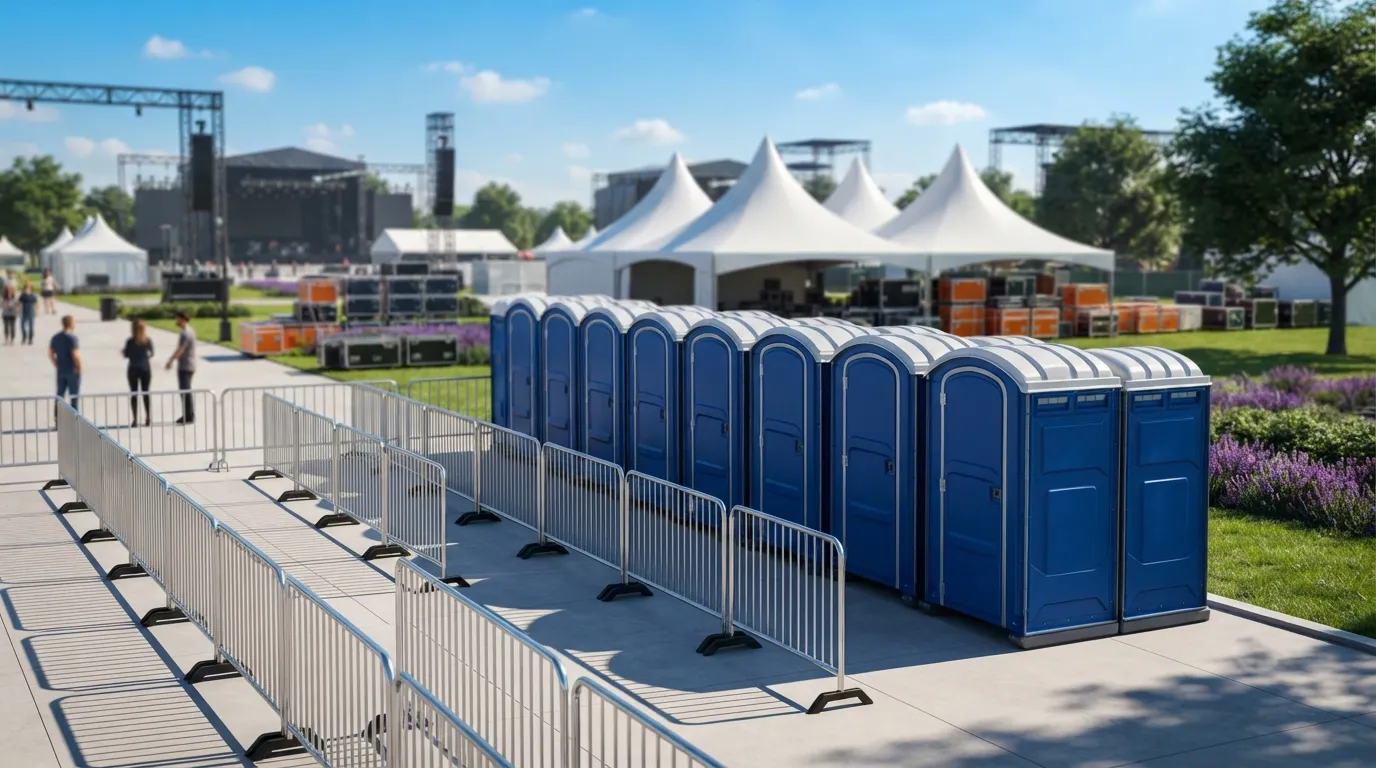
Worker count drives unit count before placement drives anything else. OSHA 1926.51(c)(1) sets the ratio at 1 toilet facility for 20 workers or fewer, then 1 toilet seat and 1 urinal per 40 workers as headcount climbs into higher bands. Space multiple units in a row with a few feet between them rather than jamming them together, so the service truck can reach each tank without repositioning. If you're not sure how many you need, how many porta potties do I need walks through the math by crew size and shift length. ANSI/PSAI Z4.3 sets a baseline service interval of once a week for up to 10 users over a 40 hour week, so tighter unit spacing that slows the service route can push you off that schedule fast. At least one unit in a cluster needs to be accessible under ADA Standards section 213.2, which requires 5 percent of clustered single-user units, never fewer than one. That unit needs a 60 inch turning circle per ADA Standards section 304.3.1, so give it more room than a standard unit, not less. See the ADA accessible porta potty page for the accessible unit's footprint before you plan the row.
Where do dumpsters, fencing and other site equipment go relative to the restrooms?
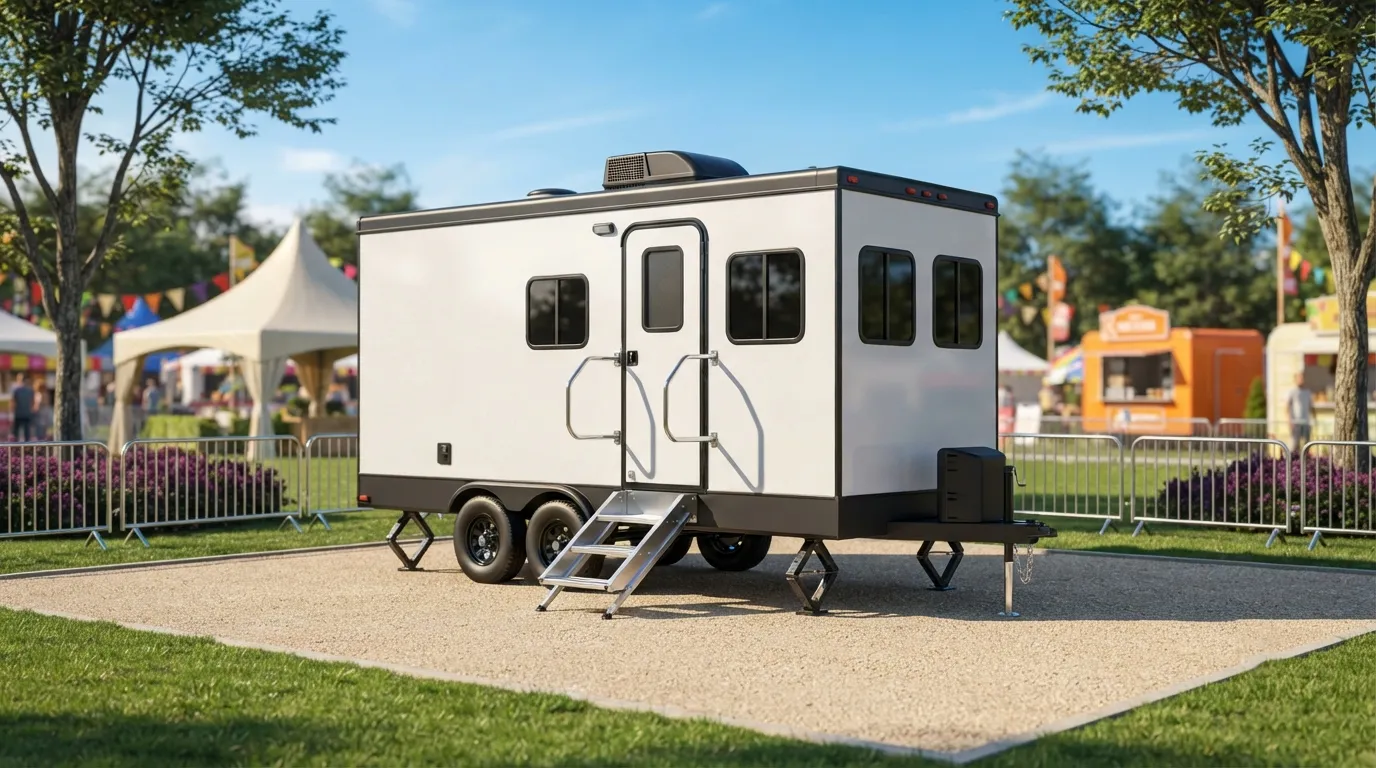
Keep the restroom cluster and the dumpster on separate approach paths if the lot allows it, because a roll-off dumpster rental delivery needs about 60 feet of straight clearance behind the truck, same as porta potty service. Crossing those paths just multiplies the chances of a blocked delivery. If your project needs temporary fence rental around the perimeter, run the fence line outside the service lane so a chain link temporary fence doesn't box in the unit you need pumped weekly. Storage and office trailers add another layer: a mobile office trailer rental with a damaged or mismatched door needs mobile office trailer replacement doors sized to the frame, not guessed at, and that trailer's own entry path shouldn't overlap the restroom service route either. For handwashing, OSHA 1926.51(f)(1) requires washing facilities specifically where crews are applying paints, coatings, herbicides or insecticides, so place a handwashing station rental near that specific work zone, not just near the toilets. If a portable sink is already on site, ozark river portable sink replacement parts can keep an aging unit running instead of renting new mid-project. Septic and holding tank equipment for a holding tank rental job follows the same access rule: a placerville septic pumping service truck, or any pump truck for that matter, needs the same straight-line clearance as a delivery truck, so plan that pad first.
Does a porta potty need to sit level?
Yes. An unlevel unit can shift, leak at the tank seam, or tip during service. Set it on firm, flat ground per ADA Standards section 302.1's stability standard, and avoid soft turf or loose fill after rain. Ask your provider to check the pad before delivery day.
How far from the building does a porta potty need to be?
There's no single fixed distance in the FACT BANK for this, but 3 feet of clearance on the service side is a practical minimum so the pump hose reaches the tank without maneuvering around obstacles. Keep the door swing clear of doorways and walkways too.
Can porta potties block a fire lane or accessible route?
No. ADA Standards section 403.5.1 requires a 36 inch clear width on an accessible route, and a unit or its door swing narrowing that path fails the standard. Fire lane blockage is a separate life-safety issue on most sites regardless of unit type.
What ground surface works best for placement?
Level concrete or compacted gravel beats loose soil or grass, especially after rain. ADA Standards section 302.1 calls for stable, firm, slip-resistant surfaces, which rules out soft or shifting ground for any accessible unit in the cluster.
Who do I ask about right-of-way placement in Brandon?
Confirm with the city before placing anything in a street, curb lane or road easement. Rules differ from private-lot placement and enforcement varies. Ask early, since a denied right-of-way spot on delivery day forces a same-day relocation you don't want to manage on-site.
Next step
Get a delivery date
Tell us the address, the dates and the headcount. We size the order and confirm the route.